
Most people only notice their gums when they bleed. And by the time that happens, the problem has already started.
We spend so much time thinking about our teeth, keeping them white, straight, and cavity free that we forget about the part that actually supports them, your gums. I often meet patients who brush and floss regularly, yet are surprised to learn they have early gum disease. Not because they did not care, but because they did not know what to look for.
The truth is simple your gums are the foundation of your oral health. When they are healthy, everything stays stable. When they are not, even the strongest teeth can begin to fail.
That’s why understanding your gums and how to keep them healthy, is just as important as brushing your teeth.
Your Gums Are the Foundation of Your Smile
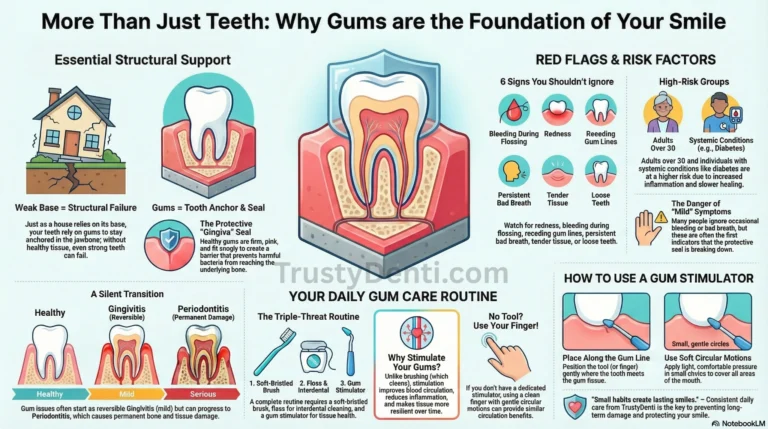
Think of your gums like the foundation of a house. You might not see it from the outside, but without it, nothing stays in place.
Your gums, technically called the gingiva, are the soft tissue that surrounds and supports each tooth. Healthy gums are firm, pink, and fit snugly around your teeth like a protective seal. This seal prevents bacteria from sneaking below the gum line and into the bone that anchors your teeth.
When gums are healthy, they create a barrier that keeps harmful bacteria out. When they’re not, that barrier breaks down, and that’s when problems begin.
Without healthy gums, even the strongest teeth can become loose. Your gums anchor your teeth into the jawbone, and if the gum tissue or underlying bone deteriorates, teeth can shift, loosen, or even fall out.
Early Warning Signs You Should Not Ignore
Gum disease often develops quietly. By the time people notice something’s wrong, it’s usually already progressed. That’s why knowing what to look for can help you catch issues early.
Here are the signs that should prompt a visit to your dentist:
• Redness or swelling in your gums
• Gums that bleed when you brush or floss
• Gums that feel tender or sore
• Gums pulling away from your teeth (receding gum line)
• Persistent bad breath that doesn’t go away after brushing
• Changes in how your teeth fit together
If you have noticed any of these signs, do not panic. Gum issues are common and very treatable when caught early.
Anyone can develop these symptoms, but some people are at higher risk and should watch more closely. Adults over the age of thirty often face a gradual increase in risk. People with systemic conditions such as diabetes may be more vulnerable due to slower healing and increased inflammation.
At the same time, many people tend to ignore mild symptoms such as occasional bleeding or bad breath, assuming they are not serious. Busy routines and irregular dental visits can further delay early detection. If you recognize yourself in any of these situations, paying closer attention to your gum health becomes even more important.
Gum disease usually begins as gingivitis, which is mild and reversible with proper care. However, if left untreated, it can progress to periodontitis, a more serious condition that affects the bone supporting your teeth. At this stage, treatment becomes more complex and long term damage may occur.
The key is early detection. Regular dental checkups play an important role in identifying these issues before they become severe.
What You Can Do Daily to Protect Your Gums
Now that you know what to watch for, the next question is: what can you actually do daily to protect your gums? The good news is you do not need a complicated routine. You just need the right habits done consistently.
A strong gum care routine includes:
• A soft bristled toothbrush that cleans gently without irritating your gums
• Floss or interdental cleaners to remove plaque from areas your brush cannot reach
• And just as importantly, adding a gum stimulator, which can take your routine one step further
While brushing and flossing focus on cleaning your teeth, a gum stimulator supports the gum tissue itself.
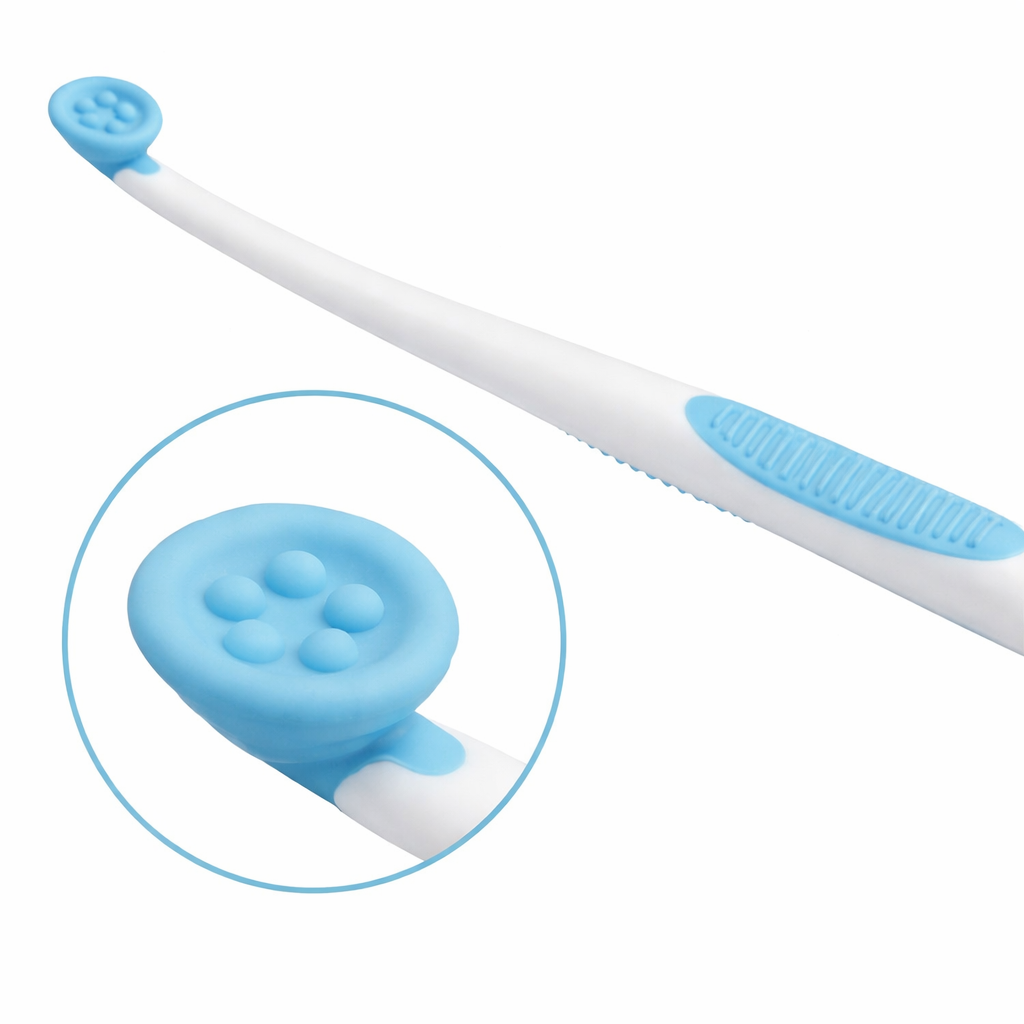
It works by gently stimulating your gums, which:
• Improves blood circulation in the gum tissue
• Helps reduce mild inflammation
• Supports healing and tissue strength
• Makes gums more resilient over time
In other words, it is a simple habit that supports your gums beyond just cleaning.
How to Use a Gum Stimulator
• Place the gum stimulator gently along your gum line
• Use soft circular motions
• Cover all areas of your gums
• Keep the pressure light and comfortable
No gum stimulator? Use your clean finger!
While a dedicated gum stimulator works best, you can get similar circulation benefits with a clean finger and the same gentle circular motions. Wash thoroughly first, and consider this a great starting point until you get a proper tool.
This process takes only a few seconds and can benefit your gum health over time.
Final Thoughts
Gum health is not something to think about only when there is pain or bleeding. It is a quiet but essential part of your overall oral health.
Most gum problems do not appear suddenly. They build slowly over time, often without obvious signs. The small habits you follow every day decide whether your gums stay strong or begin to weaken.
By paying attention early and staying consistent with simple care, you are not just protecting your gums, you are protecting your smile for the long term.
At TrustyDenti, our goal is to make oral health simple, practical, and easy to follow because small daily habits truly create lasting smiles.