One of the most common questions I hear from new moms is: “My baby has no teeth yet, so do I really need to clean the gums?” The answer is a clear and confident yes. Baby gum care is one of the most important and most overlooked steps in early childhood oral health. Furthermore, starting this habit early can shape your baby’s entire relationship with dental hygiene for years to come.
In fact, oral hygiene does not begin when the first tooth erupts. It begins the moment your baby starts feeding. Therefore, the sooner you understand infant oral care, the stronger the foundation you build for your child’s long term dental health.
Why Baby Gum Care Matters From Day One
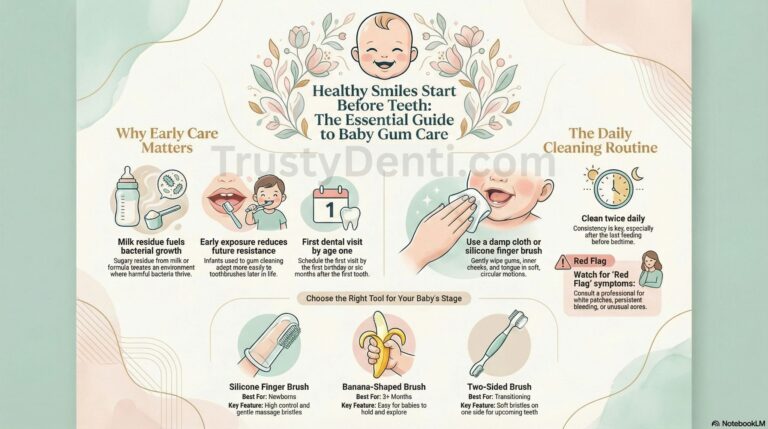
From the very first days of life, your baby’s mouth is already exposed to bacteria. Every feeding, whether breast milk or formula, leaves behind a sugary residue that settles on the gums and tongue. As a result, without regular cleaning, this residue can create an environment where harmful bacteria thrive.
Specifically, poor gum hygiene in infants can contribute to:
- Increased bacterial growth in the oral cavity
- Oral thrush, a common fungal infection in newborns
- Early childhood caries, also known as baby bottle tooth decay
Additionally, introducing your baby to gum cleaning early helps them get comfortable with the sensation of oral care. Consequently, when the time comes to introduce a toothbrush, babies who have experienced regular gum cleaning tend to adapt much more easily.
How to Clean Your Baby’s Gums: A Simple Step by Step Approach
You can start this within days of bringing your baby home. Here’s all you need: a clean, soft, damp washcloth or gauze pad
The technique is super simple:
1. Wash your hands
2. Wrap the cloth around your finger
3. Gently wipe your baby’s gums, inner cheeks, and tongue in circular motions
4. Be gentle you’re just removing milk residue
5. Do this twice a day, especially before bedtime
Now, this traditional method works great, but many parents love using baby gum cleaning brushes because they’re even easier.
Baby Gum Cleaning Brushes:
Silicone finger toothbrushes have become super popular, and I totally get why. They slip over your finger and have soft bristles that make cleaning easier and more effective.
Types you’ll see:
Silicone Finger Brushes – These are perfect for newborns. You get all the control of your finger with gentle massage bristles.
Banana-Shaped Brushes – Shaped like a banana, babies can hold these themselves while the textured surface cleans their gums. Great for babies 3+ months.
Two-Sided Brushes – Soft bristles on one end, textured surface on the other. Best for when you’re getting ready to transition to a real toothbrush.
What to look for:
– BPA-free, food-grade silicone (non-negotiable!)
– Soft, flexible bristles
– Easy to grip
– Right size for your baby’s mouth
How to use them: Sterilize before first use, wet with clean water (no toothpaste yet), gently massage all gum surfaces, and let your baby explore if they grab it. Clean and air-dry after each use, and replace every 2-3 months.
How Feeding Habits Affect Your Baby’s Oral Health
One aspect of infant oral health that many parents overlook is the role of feeding patterns. Specifically, nighttime feeding habits can have a significant impact on your baby’s oral environment. When a baby falls asleep while feeding, milk residue remains in the mouth for extended periods. Because saliva production decreases during sleep, the mouth’s natural cleansing ability is reduced, which means bacteria have more time to act on the residue.
To minimize this risk, I generally recommend:
- Avoiding putting your baby to sleep with a bottle, unless it contains water
- Cleaning the gums after the last feeding of the day
- Gradually reducing prolonged comfort feeding sessions as the baby grows
These small, practical adjustments can significantly reduce the risk of baby bottle tooth decay and set a healthier foundation for when the first teeth emerge.
What Healthy Baby Gums Look Like and When to Seek Help
Regular gum cleaning is also a wonderful opportunity to become familiar with your baby’s oral health. Knowing what is normal helps you spot potential concerns early. Healthy baby gums are typically:
- Pink in color and smooth in texture
- Moist and free from swelling
- Without any unusual bumps, patches, or bleeding
However, you should consult a dental professional if you notice:
- White patches that do not wipe away, which may indicate oral thrush
- Persistent redness, swelling, or bleeding during cleaning
- Any unusual bumps or sores that do not resolve within a few days
Early evaluation is always better than waiting. Moreover, catching minor issues early prevents them from developing into more serious concerns down the line.
When Should Your Baby Have Their First Dental Visit?
I recommend scheduling the first dental visit by the time your baby turns one, or within six months of the first tooth appearing. This visit is primarily preventive and educational rather than treatment focused.
During this appointment, your dental provider will assess your baby’s oral development, offer personalized guidance on feeding habits and gum care, and help your child begin to feel comfortable in a dental setting from an early age. Starting dental visits early means your child associates the dentist with routine care rather than fear, which is a significant advantage for their long term oral health journey.
Final Thoughts: Small Steps, Big Impact on Your Baby’s Dental Health
Baby gum care may seem like a small detail in the grand scope of parenting, but its impact on long term oral health is anything but small. By starting early, staying consistent, and keeping the experience positive, you are giving your child a remarkable gift: a healthy relationship with oral care that can last a lifetime.
So do not overthink it. A gentle wipe once a day is genuinely enough to get started. Whether you use a damp cloth or a silicone finger brush, what matters most is simply that you begin. And at TrustyDenti, we believe that healthy smiles are built one small habit at a time. Yours is already off to a wonderful start.