
Every parent knows that moment. You hand your child a toothbrush, turn away for two seconds, and look back to find them happily licking the toothpaste straight off the bristles. No brushing. Just snacking.
If this sounds familiar, you are not alone and honestly, you are not doing anything wrong. This is one of the most common concerns I hear from parents of young children. The good news is that the fix is surprisingly simple, and it starts with how you load the toothbrush.
Why Kids Eat Toothpaste in the First Place
Before getting to the solution, it helps to understand the problem. Children’s toothpastes are specifically designed to taste fruity, sweet, minty in a mild way because getting kids to accept brushing is already half the battle. However, that same appealing flavour makes toothpaste feel more like a treat than a dental product to a young child.
On top of that, most children under the age of six have not yet developed the instinct to spit. Swallowing feels natural to them. They have spent their entire lives swallowing everything that goes into their mouth, so expecting them to suddenly spit something out is genuinely asking a lot.
The result is that brushing time often turns into toothpaste tasting time which is not just unhelpful for their teeth but also a concern if they are consistently swallowing fluoride in larger amounts than recommended.
The Simple Fix: Push the Paste into the Bristles
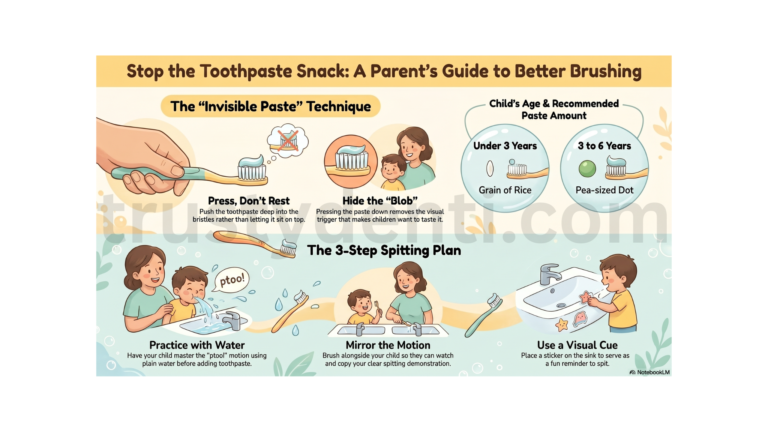
Here is the change that makes a real difference: instead of placing toothpaste on top of the bristles, press it down into them.
Most parents squeeze a small strip or pea-sized dot of toothpaste and sit it on the flat surface of the bristle tips. This makes it very easy for a child to lick off without ever brushing at all. The paste is right there, accessible, and delicious.
When you instead press the toothpaste down into the bristles using your finger or the toothbrush itself, a few important things happen:
- The paste is no longer sitting on the surface where it can be easily licked
- The toothpaste gets distributed throughout the bristles, so it actually contacts the teeth during brushing
- There is less of a visual “blob” that triggers the urge to taste it
To do this correctly, squeeze out the recommended amount (a rice grain size for children under three, a pea size for ages three to six) and then gently work it into the base of the bristles with your fingertip. You will notice the paste disappears into the brush rather than sitting on top.
This one small change significantly reduces the opportunity for toothpaste snacking right from the start.
Teaching Children to Spit: A Step by Step Approach
The second part of the solution is building the spitting habit. This takes a little patience, but it is entirely achievable with young children when you make it into something fun rather than a correction.
Step 1: Start with water
Before introducing toothpaste into the equation, practice spitting with plain water. Ask your child to take a small sip, swish it around, and then spit it into the sink. Make it dramatic a big “ptoo!” sound, a celebration when they get it right. Children respond beautifully to this kind of playful reinforcement.
Step 2: Demonstrate yourself
Children learn by watching. Make a point of brushing alongside your child and spitting visibly and clearly. Say out loud, “We always spit the toothpaste out — watch me.” Repetition over days and weeks builds the habit naturally.
Step 3: Use a visual cue
Some children do better with a visual reminder. A small sticker on the sink or a silly drawing of a mouth spitting can serve as a fun prompt during brushing time. It turns spitting into part of the routine rather than an afterthought.
What About the Amount of Toothpaste?
This is worth addressing directly, because the amount matters for safety as much as the technique.
For children under three years old, a smear of toothpaste roughly the size of a grain of rice is sufficient and safe. For children between three and six, a pea-sized amount is the right quantity. These small amounts mean that even if a young child does swallow some toothpaste occasionally, the fluoride intake remains within safe limits.
The concern with toothpaste swallowing is not usually about a single incident. Rather, it is about consistent swallowing of large amounts over time. By using the correct quantity and pressing it into the bristles as described, you reduce both the risk and the temptation significantly.
A Small Change, a Real Difference
Brushing habits formed in early childhood tend to stay with children for life. Getting this right does not require expensive products or complicated routines sometimes it just requires knowing the right technique.
Pressing the toothpaste into the bristles and making spitting a learned, celebrated habit are two small adjustments that genuinely work. Start with water practice today, adjust how you load the brush tonight, and you will likely see a difference within a week or two.
At TrustyDenti, we believe that good oral health begins with simple habits formed early in life. Parenting comes with countless questions, and our goal is to make dental care easier by sharing clear, evidence-based guidance you can trust. From the first tooth to lifelong smiles, we are here to help families build healthy habits one step at a time.