
Most cavities in little kids do not begin as obvious cavities. They begin quietly, as a tiny white spot most parents almost miss.
No hole. No pain. No dramatic symptom. Just a small white spot on the tooth that suddenly makes you pause and wonder, “Was that always there?”
And honestly, that small moment of noticing matters more than most parents realize.
Early childhood tooth decay is one of the most common chronic diseases in children worldwide, and it often starts as a white spot long before a cavity forms. But not every white spot means decay. Some are early signs that enamel is weakening, while others are harmless enamel changes caused by too much fluoride during tooth development.
Knowing the difference helps you respond early without unnecessary worry.
1. White Spot Lesions: The First Sign of a Cavity
What Are They?
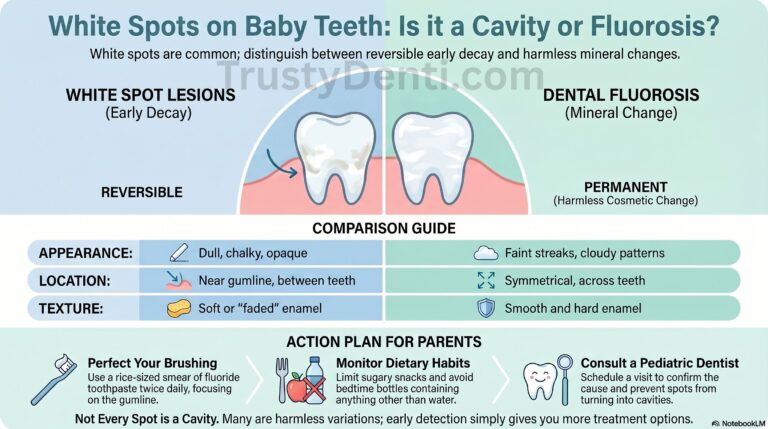
A cavity usually does not start as a dark hole. It often starts as a soft looking white spot where the enamel is beginning to lose minerals. Dentists call these white spot lesions, and they are considered the earliest visible stage of tooth decay. The good news is that at this stage, the tooth surface has not broken down yet, which means the process can often still be reversed.
What Do They Look Like?
These spots usually look dull and chalky instead of shiny. Healthy enamel reflects light and looks smooth and glossy, while white spot lesions lose that shine and can look almost like a faded patch of chalk on the tooth. They are commonly found near the gumline or between teeth and may become easier to notice when the teeth are dry.
If nothing changes, the spots can slowly turn yellow or brown and eventually become true cavities.
What Causes Them?
These white spots form when acids from bacteria begin pulling minerals out of the enamel. This often happens when sugary foods or drinks stay on the teeth too long, when milk or juice sits around the teeth during nighttime bottle feeding, or when plaque builds up because brushing has not become consistent yet.
Baby teeth have thinner enamel than adult teeth, so changes can happen faster than many parents expect.
What Should Parents Do?
If you notice a chalky white area near your child’s gumline, it is worth scheduling a dental visit sooner rather than later. Catching these spots early can make a very big difference.
At home, focus on brushing twice a day with a rice grain sized amount of fluoride toothpaste, especially along the gumline where these spots often begin. Limiting frequent sugary snacks and avoiding bottles in bed unless they contain only water can also help protect the enamel before a cavity forms.
2. Dental Fluorosis: When Fluoride Leaves White Marks
What Is It?
Fluoride does an excellent job protecting teeth, but in very young children, swallowing too much fluoride while the teeth are still developing can sometimes leave faint white markings called dental fluorosis.
This is not a disease, and it does not weaken the teeth. It is simply a cosmetic change in how the enamel formed underneath the gums.
What Does It Look Like?
Fluorosis usually looks different from early decay. Instead of one chalky patch near the gumline, you may notice faint white streaks, cloudy patterns, or light marks spread more evenly across the tooth surface. The spots often appear symmetrically on matching teeth. The enamel still feels smooth and hard, and many mild cases are subtle enough that parents barely notice them.
What Causes It?
Fluorosis most commonly happens when young children regularly swallow fluoride toothpaste or use more fluoride than they need while their teeth are developing. Using too much toothpaste, using adult strength fluoride products too early, or getting high fluoride exposure from several sources together can all contribute.
What Should Parents Do?
In most cases, mild fluorosis does not need treatment. Still, it is a good idea to mention it during dental visits so your dentist can confirm what you are seeing. To help prevent fluorosis moving forward, use only a rice grain sized smear of toothpaste for babies and toddlers and a pea sized amount for children between ages three and six. It also helps to supervise brushing and gently teach children to spit out toothpaste instead of swallowing it.
Here Is What Parents Should Remember
A white spot is not automatically an emergency, but it is worth paying attention to.
Sometimes it is the very beginning of a cavity that can still be stopped early. Other times, it is simply a harmless enamel variation or mild fluorosis. Either way, noticing it early gives you options, and that is always a good thing.
Noticing these small changes early isn’t overthinking, it’s one of the most effective ways to prevent bigger dental problems later.
Keep brushing. Keep the dental visits consistent. And if something on your child’s tooth suddenly catches your eye, trust yourself enough to ask about it.
And if you ever want an easier way to keep track of changes between dental visits, our TrustyDenti app, OralNest helps parents monitor child’s oral health with simple tools designed for real everyday life. Because when it comes to little teeth, the smallest things are often the first signs worth noticing.