After lunch, a snack, or even a quick coffee break, most people reach for their phone or get back to work but very few think about rinsing their mouth with water.
Yet this tiny habit takes only a few seconds and can make a noticeable difference in keeping your mouth clean between brushing sessions.
Most people focus primarily on brushing and flossing, which are essential for good oral hygiene. However, what happens between meals also plays an important role in maintaining a healthy mouth. One simple step that is often overlooked is rinsing with plain water after eating.
As a dentist, I often see patients who brush and floss regularly but still experience lingering food debris, mild bad breath, or plaque buildup. In many cases, these issues can be reduced with something as simple as rinsing the mouth with water after meals.
In other words, oral hygiene is not only about the two minutes spent brushing in the morning and at night. What you do throughout the day matters as well.
Why Food Often Gets Trapped in the Mouth After Meals
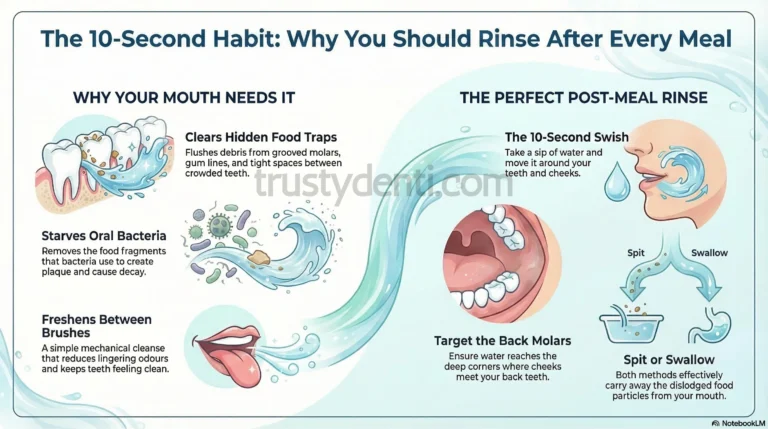
Food doesn’t stay only on the chewing surfaces of your teeth. Small fragments can easily become trapped between teeth, along the gum line, and in the spaces where your cheeks meet the back teeth.
Because these areas are less visible, many people naturally focus more on cleaning the front teeth. As a result, food particles may remain hidden in other parts of the mouth.
The back teeth (molars) tend to trap more food. Their broad chewing surfaces contain small grooves that help grind food, but those same grooves can also catch tiny fragments.
At the same time, the tongue and cheeks constantly move food toward the back of the mouth while chewing. This can push particles into small spaces near the molars or between the cheeks and gums.
Food fragments commonly get trapped in areas such as:
- around the back molars and wisdom tooth regions
- along the gum line of the back teeth
- between tightly spaced or crowded teeth
- in the corners between the cheeks and gum ridge
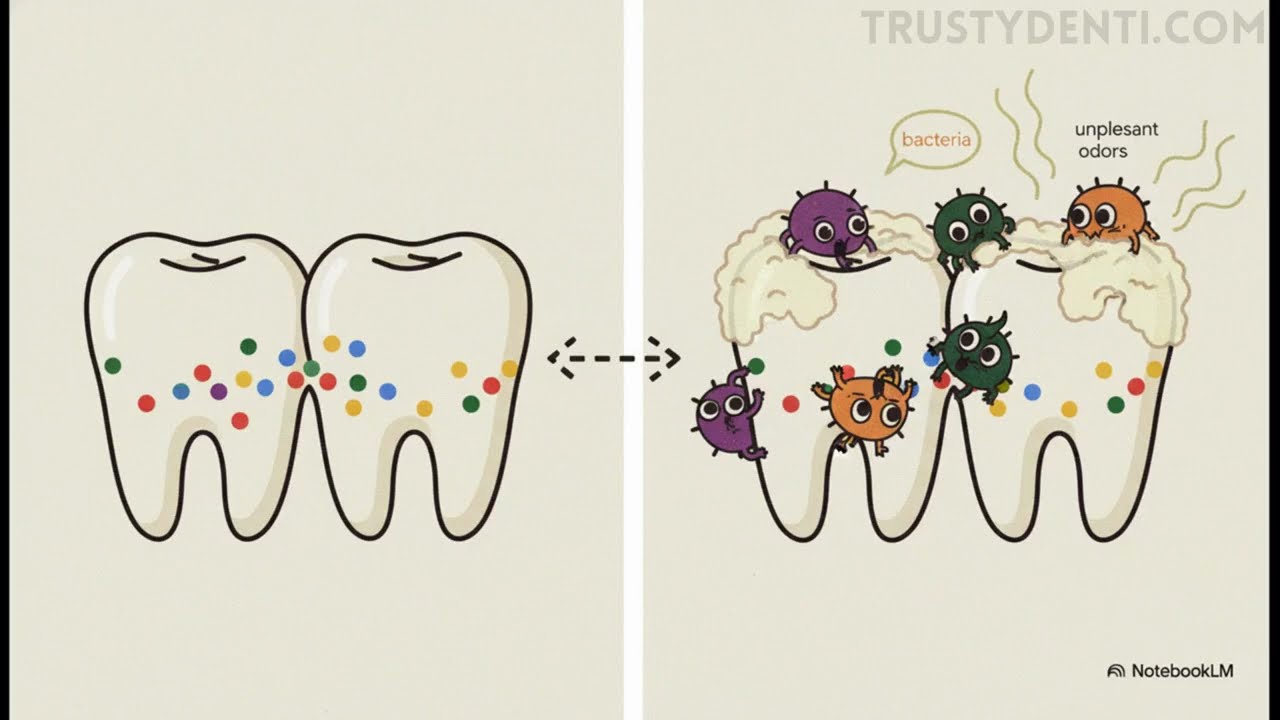
After meals, these particles can remain in the mouth for hours. During that time, bacteria begin to break them down, which may contribute to plaque buildup and unpleasant odors. A quick rinse with water helps flush away much of this debris before it builds up.
Who Benefits the Most from Rinsing After Meals
While rinsing with water after eating can help almost everyone, certain individuals may benefit even more from this simple habit. In particular, people whose teeth or dental structures naturally trap food may notice the greatest improvement.
People with Crowded or Close-Spaced Teeth
When teeth are tightly spaced, food particles tend to get lodged between them more easily, allowing small fragments to remain trapped in these tight spaces.
Older Adults
Similarly, older adults may experience more frequent food retention. As people age, natural changes such as gum recession, dental restorations, reduced saliva flow, and minor shifts in tooth alignment can create additional areas where food collects.
People with Braces or Dental Work
In addition, individuals with braces, bridges, or dental crowns often have more surfaces where food particles can accumulate, making it easier for debris to become trapped around teeth.
For people in these situations, rinsing with water after meals can help loosen trapped particles and wash away leftover debris, which may reduce the buildup of bacteria that contribute to plaque formation and unpleasant mouth odors.
The Health Benefits of Rinsing After Meals
You don’t need mouthwash or fancy rinses-plain water is enough to do the job. Rinsing after meals helps:
- Dislodge food particles from hard-to-reach areas
- Flush out debris from the gum line and cheeks
- Reduce bacterial buildup and unwanted odors
- Keep your mouth feeling cleaner between brushing sessions
It’s essentially a simple, mechanical cleanse that supports the work your toothbrush will do later.
How to Rinse Your Mouth Properly
It only takes a few seconds:
- Take a small sip of clean water.
- Gently swish it around your teeth, gums, and cheeks for 5-10 seconds.
- Allow the water to move toward the back molars.
- After swishing, either spit the water out or swallow -choose what feels comfortable for you. The key is to let the water move around your teeth, gums, and cheeks so it can carry away food particles.
This quick rinse helps remove lingering particles and supports a fresher, healthier mouth all day long.
Small Habit, Big Impact
In dentistry, some of the most effective improvements often come from small daily habits rather than complicated routines.
Many patients who begin rinsing after meals report that their mouth feels cleaner throughout the day. In addition, they often notice fewer food particles when brushing later.
Of course, brushing and flossing remain the foundation of good oral hygiene. However, what you do between meals can also play an important role in maintaining a healthy oral environment.
Final Thoughts
Good oral health does not always require expensive products or complicated routines. Sometimes, it begins with simple daily actions.
Rinsing your mouth with water after meals is a quick and practical way to remove leftover food particles and keep your mouth feeling fresh throughout the day.
So next time you finish a meal or snack, take a moment to swish some water around your mouth. It’s a small habit-but one that can contribute to a cleaner and healthier smile.
At TrustyDenti, our mission is to make oral health care simple, practical, and easy to apply in everyday life because small daily habits can create lasting smiles.
OralHealthCareTips